The Impact of VR and AR on Sports Entertainment
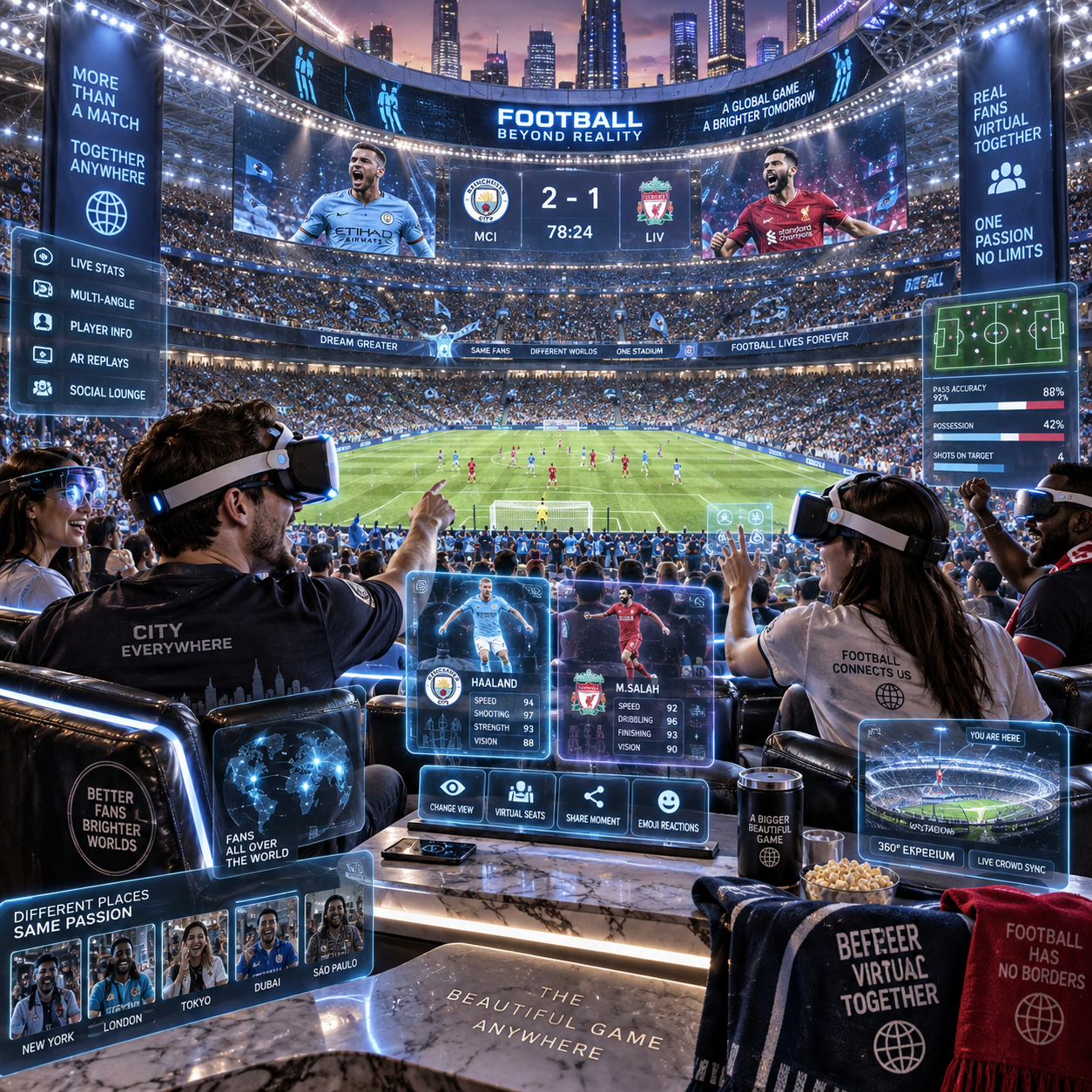
Virtual reality (VR) and augmented reality (AR) are changing how audiences watch, play, and interact with sport. Instead of receiving the same broadcast feed or attending only in person, fans can explore virtual stadiums, view live player data, enter sports games, and participate in social experiences from almost anywhere.
The shift is still developing. Hardware costs, connectivity, privacy, comfort, and data accuracy will determine whether immersive technology becomes a regular part of sports entertainment or remains an occasional premium feature.
How VR and AR Are Changing Sports Entertainment
Virtual reality creates a fully digital sports environment, while augmented reality adds digital information to the real world. Together, VR and AR make sports entertainment more interactive by giving fans new ways to view events, play sports games, and connect with teams.
VR typically uses a headset to place the user inside a simulated environment. A basketball fan might sit in a virtual courtside seat, enter a training drill, or watch a replay from a position that traditional cameras cannot provide. The user remains inside the digital experience rather than seeing the physical room around them.
AR works differently. A smartphone, smart glasses, stadium screen, or other device displays digital graphics over the physical environment. At a baseball game, AR could identify a pitcher, show pitch speed, or illustrate the projected flight of a ball while the spectator continues watching the field.
Mixed reality (MR) combines elements of both approaches. It can anchor virtual objects in a physical space and allow users to interact with them. For sports entertainment, that could mean placing a life-sized virtual player on a living-room floor or displaying a three-dimensional match model beside a television.
Immersive Sports Viewing and Broadcasting
Immersive sports viewing gives fans more control over perspective, information, and social context. Sports broadcasting can use VR and AR to offer virtual stadium environments, alternative camera angles, real-time overlays, and personalized match coverage.
A VR broadcast may place the viewer in a digital seat behind the goal, beside the basketball court, or above a motor-racing circuit. Cameras positioned around the venue can support viewpoint selection, although the quality of the experience depends on camera placement, production standards, network capacity, and the available headset.
AR strengthens conventional sports broadcasting by adding context without removing the live action. On-screen graphics might show:
- Player speed, distance covered, or shot accuracy.
- Team formations and tactical movement.
- Live scores, standings, and time remaining.
- Replay paths, virtual offside lines, or ball trajectories.
- Injury updates and substitutions.
Personalized viewing is another important development. One fan may prefer a tactical camera and detailed statistics, while another may want a simple field-level feed with minimal graphics. Broadcasters can also create shared virtual rooms where remote fans watch together, talk during key moments, and react to replays.
That flexibility has a cost. Too many overlays can distract from the contest, and a virtual camera may offer an impressive perspective without matching the emotional atmosphere of a real stadium. The strongest broadcasts will likely treat immersive tools as selectable layers rather than forcing every viewer into the same format.
VR and AR in Sports Games
VR and AR are reshaping sports games by turning spectators into active participants. Players can compete in immersive simulations, practise specific movements, or take part in interactive challenges at home, in an arcade, or at a sports venue.
VR sports games place users directly inside activities such as boxing, tennis, golf, baseball, skiing, and football training. Motion tracking allows the player to swing, throw, block, or move through a virtual environment. These experiences can make physical activity feel closer to a game than a conventional workout.
AR sports games use the surrounding environment. A player might transform a living room into a target range, project a virtual goal onto a driveway, or follow a digital training course through a park. Because AR works with the real world, it can support short sessions that require less setup than a fully immersive VR experience.
Teams and coaches also use simulation concepts for decision-making and practice. A quarterback, goalkeeper, or driver can review scenarios repeatedly, while a coach can test tactical situations without recreating an entire match. Training simulations are useful for repetition, but they cannot fully reproduce physical contact, crowd pressure, weather, fatigue, or the unpredictability of opponents.
For consumers, the practical test is simple: does the experience offer meaningful interaction after the novelty fades? Strong sports games provide responsive controls, clear feedback, safe movement areas, and enough variety to encourage repeat use.
Fan Engagement Beyond the Stadium
VR and AR extend fan engagement beyond the stadium by connecting remote supporters with teams, athletes, and other audiences. These technologies can make distance less limiting, although they do not replicate every part of attending a live event.
Virtual meet-and-greets can place fans in digital rooms with athletes, mascots, or commentators. A supporter might view a recorded locker-room tour, explore a historic stadium, or attend a virtual press conference with other fans. These formats can help international audiences participate when travel is impractical.
At physical venues, AR can turn a match into an interactive layer of content. Fans may scan a ticket or team logo to unlock player profiles, take part in prediction games, access directions, or see a three-dimensional replay. The same tools can support sponsorships, but commercial messages need careful limits so that they do not overwhelm the sporting experience.
Digital collectibles can also connect moments to fan identity. A memorable goal, race, or championship celebration might become a licensed digital item with verified ownership or access benefits. Collectibles are not automatically valuable, however. Their appeal depends on clear rights, reliable platforms, sensible pricing, and genuine utility.
Social design matters as much as visual quality. Remote fans should be able to communicate, control notifications, and participate without feeling pressured to purchase items or remain online throughout the event.
The Role of VR and AR in Sports Betting
VR and AR could make sports betting interfaces more visual and information-rich, but they cannot guarantee better predictions or profitable results. Live betting and in-play betting may use immersive match views, real-time statistics, and visual data overlays to help users understand changing game conditions.
An AR betting interface could display the current score, possession, player status, shot locations, or market movement beside a live broadcast. A VR sports environment might let a viewer move between virtual camera positions while reviewing the action. For a bettor researching an in-play market, clearer presentation may make information easier to find than a crowded conventional interface.
Potential applications include:
- Overlaying verified live statistics on a match view.
- Showing historical performance in context rather than as isolated numbers.
- Displaying time remaining, lineups, substitutions, and injury information.
- Allowing users to compare selected markets without leaving the broadcast.
- Presenting event timelines and replays before a user makes a decision.
These features also create risks. Faster access to information can encourage impulsive decisions, especially when an interface makes betting feel like part of the game itself. Delays between an on-field event and an updated market can create confusion, while inaccurate or incomplete data may mislead users.
Betting platforms should identify data sources, explain suspension rules, show timestamps, and provide deposit limits, time-outs, and self-exclusion tools. Immersive presentation should support informed choice, not create pressure to place more bets. The GambleAware guidance on safer gambling provides useful context for understanding risk and maintaining control.
Benefits and Challenges of Adoption
The main benefits of VR and AR are greater immersion, personalization, accessibility, and interaction; the main challenges involve cost, comfort, privacy, reliability, and responsible use. Adoption will depend on whether the practical value justifies the extra hardware and complexity.
Key benefits
- Personalization: Fans can choose viewpoints, statistics, replays, and social features that match their interests.
- Accessibility: Remote supporters may experience virtual seats, tours, and fan communities without traveling.
- Learning and training: Repeated simulations can help athletes, coaches, and players study decisions and technique.
- New commercial formats: Leagues and broadcasters can build premium experiences, sponsorship placements, and interactive content.
- Deeper participation: Sports games and AR challenges can turn passive viewing into physical or social activity.
Key challenges
- Equipment and access: Headsets, compatible phones, fast internet, and venue infrastructure can exclude some audiences.
- User comfort: Extended VR use may cause eye strain, motion discomfort, or fatigue for some people.
- Privacy: Wearable technology can collect movement, voice, biometric, location, and behavioral data.
- Technical reliability: Poor tracking, latency, battery limits, or connectivity failures can damage a live experience.
- Data governance: Sports betting and broadcast overlays require accurate, timely, and transparent information.
- Responsible engagement: Gamified interfaces can increase pressure to watch, spend, or place rapid wagers.
A useful adoption test is the value, friction, trust framework. Value asks whether the feature improves the sports experience. Friction covers setup, cost, comfort, and usability. Trust includes privacy, accessibility, data accuracy, and responsible gambling protections. If any one of these areas is weak, impressive technology may struggle to gain lasting use.
What the Future May Hold
The future of VR and AR in sports entertainment will probably involve more flexible viewing, interactive sports games, connected venues, and data-rich interfaces rather than one universal replacement for television or stadium attendance. Progress will depend on affordability, content quality, reliable networks, and user acceptance.
Broadcasters may offer layered coverage in which a standard feed remains available alongside optional VR seats, tactical views, and AR statistics. Sports games could become more social, allowing participants on different devices to share training sessions or compete in mixed-reality challenges.
Venues may use wearable technology and AR to provide navigation, accessibility tools, instant replays, and personalized information. Teams could combine digital fan communities with live events, giving supporters meaningful ways to participate before and after a match.
Sports betting interfaces may also become more visual, especially for live betting and in-play betting. That development should be measured by clarity and control, not by the number of prompts or markets shown on screen. Regulators, leagues, broadcasters, and operators will need common standards for data accuracy, privacy, age protection, advertising, and responsible gambling.
VR and AR are expanding the ways audiences interact with sport. Their long-term impact will be strongest where immersive technology solves a real problem or adds genuine participation. Affordable access, comfortable design, transparent data, and responsible implementation will matter more than novelty alone.
Frequently Asked Questions
What is the difference between VR and AR in sports?
VR places users inside a fully simulated environment, while AR adds digital information or objects to the physical world. VR suits virtual stadiums and immersive sports games; AR suits live overlays, venue features, and mobile experiences.
How is VR changing sports viewing?
VR can provide virtual seats, alternative camera perspectives, shared viewing rooms, and interactive replays. Availability and quality depend on broadcast production, network performance, and compatible equipment.
Can AR improve live sports betting?
AR can organize live statistics, timelines, and match information more clearly, but it cannot ensure accurate predictions or winning outcomes. Reliable data, transparent timestamps, betting limits, and responsible gambling tools remain essential.
Are VR sports games suitable for training and entertainment?
Yes. VR sports games can support repetition, decision-making, fitness, and entertainment. They complement rather than replace physical coaching because simulations cannot reproduce every real-world condition.
What are the main limitations of VR and AR in sports?
The main limitations include equipment costs, motion discomfort, privacy concerns, connectivity problems, limited content, accessibility barriers, and the risk that immersive design encourages excessive screen time or impulsive betting.