Building a Career in Sports Game Development: Skills, Roles, and Career Paths
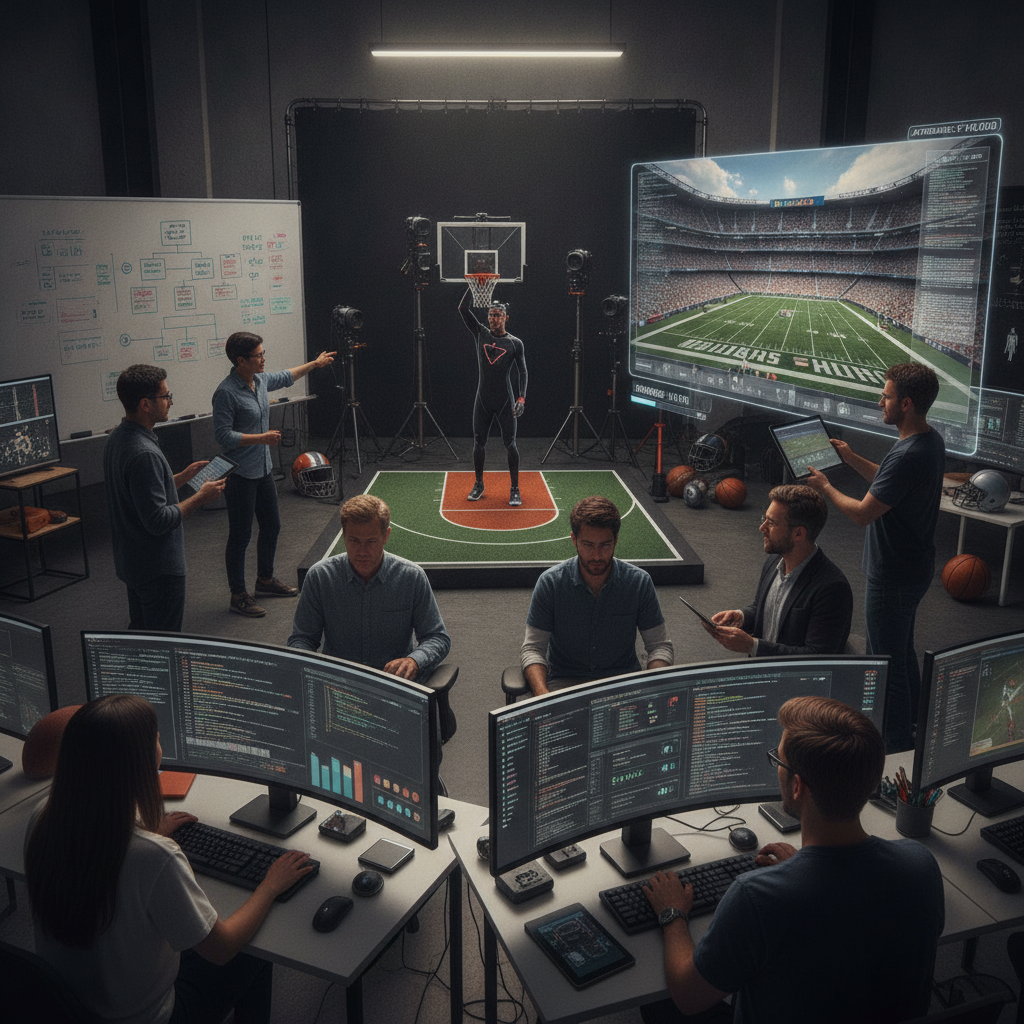
Building a career in sports game development means combining game-making skills with an understanding of competition, athletes, teams, and the way fans experience sport. The field includes far more than programming: designers, artists, animators, producers, testers, data specialists, and live-operations teams all contribute to a finished sports game.
A practical route usually starts with small projects. Build a playable prototype, learn a game engine, study how sports mechanics work, and collect evidence that you can solve development problems. Sports knowledge helps, but employers also look for collaboration, technical ability, creative judgment, and a portfolio that demonstrates what you can make.
What Does Sports Game Development Involve?
Sports game development is the process of designing, building, testing, launching, and updating an interactive sports experience. It can involve arcade gameplay, detailed sports simulation, career modes, online competition, player and team data, artificial intelligence, and live content.
The work begins with a concept. A team decides whether the game should prioritize authentic simulation, accessible arcade action, management strategy, fantasy competition, or a combination of these approaches. Designers then define the core loop: what players do repeatedly, how they improve, and why each match remains engaging.
Development typically moves through several overlapping stages:
- Pre-production: establish the concept, audience, rules, technology, scope, and visual direction.
- Prototyping: test movement, controls, scoring, camera behavior, and basic match flow with simple assets.
- Production: create characters, stadiums, interfaces, animations, sound, gameplay systems, online features, and data pipelines.
- Testing and balancing: identify bugs, improve accessibility, tune difficulty, and compare simulated outcomes with intended sports behavior.
- Launch and live development: release the game, monitor performance, fix issues, add content, and respond to player feedback.
Authenticity requires judgment. A mathematically accurate sports simulation can feel slow or difficult, while an accessible game may simplify rules and physics. Strong teams decide which details improve the player experience and which can be abstracted.
Career Roles in Sports Game Development
Sports game development offers careers across design, engineering, art, production, quality assurance, data, and live operations. The right role depends on whether you prefer building systems, shaping player experiences, creating visuals, organizing teams, or analyzing performance.
Design and production roles
- Game designer: creates rules, controls, progression, game modes, balance, and user experiences. A sports game designer may specialize in gameplay, systems, economy, career modes, or user interface.
- Producer: coordinates schedules, priorities, dependencies, risks, and communication between disciplines. Producers keep ambitious features aligned with time and technical constraints.
- Live-operations professional: plans seasonal content, events, updates, player engagement systems, and service improvements after launch.
Technical, visual, and testing roles
- Gameplay programmer: implements controls, physics, rules, cameras, character behavior, and match logic using a game engine.
- Artificial intelligence programmer: builds opponent decision-making, team tactics, positioning, navigation, and adaptive difficulty.
- Animator and technical animator: creates believable movement, blends transitions, and connects animation systems to gameplay.
- Artist: works on characters, uniforms, environments, lighting, visual effects, menus, or technical art pipelines.
- QA tester: reproduces bugs, tests edge cases, checks builds, and verifies that rules and features work across platforms and network conditions.
- Data specialist: manages player and team data, ratings, telemetry, statistical models, and tools that support realistic simulation and balancing.
Smaller studios often ask people to cover multiple areas. That can accelerate learning, although it may provide less specialization than a large production environment.
Skills You Need to Succeed
To succeed in sports game development, develop one strong primary discipline alongside basic knowledge of design, production, sports systems, and teamwork. Employers value demonstrable problem-solving more than a long list of disconnected tools.
Technical skills vary by role. Programmers commonly benefit from C++, C#, Python, version control, debugging, software architecture, and familiarity with engines such as Unity or Unreal Engine. Designers should understand player feedback, pacing, probability, balancing, interface design, and how to document mechanics clearly.
Every discipline benefits from the following abilities:
- Breaking a large feature into testable tasks.
- Communicating trade-offs with artists, engineers, designers, and producers.
- Using feedback without losing sight of the product’s goals.
- Understanding performance, accessibility, platform constraints, and usability.
- Learning tools independently when a project requires them.
Sports knowledge is useful when it improves decisions. Study formations, rules, tactics, player roles, statistics, and fan expectations. However, knowing a sport does not replace development practice. A strong candidate can explain how sports knowledge informed a mechanic, then show the mechanic working in a playable build.
A useful framework is rules, rhythm, and reward. Rules define what can happen, rhythm controls the pace of play, and reward gives the player a reason to master the system. If one layer is weak, authentic details alone will not create an enjoyable game.
Education, Self-Learning, and Entry Routes
There is no single required degree for sports game development; formal study, self-learning, practical projects, and junior work can all lead into the industry. The strongest route is the one that produces reliable skills and visible evidence of applied work.
A degree in computer science, software engineering, game development, animation, digital art, interaction design, or a related subject can provide structure, feedback, and access to collaborative projects. It may also help with fundamentals such as algorithms, linear algebra, programming patterns, or production methods. The trade-off is time and cost, and a qualification alone does not demonstrate that you can finish a game feature.
Self-learning can be more targeted. Follow documentation for Unity or Unreal Engine, complete focused programming or design courses, recreate a small sports mechanic, and study postmortems from real projects. Keep the scope controlled: a basic penalty-kick prototype finished in six weeks is more valuable than an unfinished attempt to create an entire football simulation.
Other entry routes include:
- Game jams that force quick decisions and collaboration.
- Modding existing sports games to learn tools, rules, and community expectations.
- Internships, apprenticeships, student teams, and junior QA roles.
- Open-source tools, data projects, or small multiplayer experiments.
- Community tournaments or esports projects where you can support testing and operations.
When applying, tailor your materials to the role. A gameplay programmer should lead with code and systems; a designer should explain decisions and iteration; a QA applicant should show careful bug reports and test plans.
Building a Portfolio That Gets Noticed
A sports game portfolio gets noticed when it shows playable work, clear decisions, and evidence of iteration. Recruiters and hiring teams need to see how you think, not only which software you have opened.
Create two or three focused projects rather than one oversized promise. A useful portfolio may include a small basketball shooting prototype, a football team-positioning simulation, a racing opponent AI experiment, or a menu and squad-management interface using fictional player and team data.
For each project, explain:
- The problem or player experience you wanted to create.
- Your exact contribution and the tools you used.
- The first version, the feedback you received, and what changed.
- Technical constraints, known limitations, and possible next steps.
Include a playable build or video when possible. Add short technical breakdowns for systems such as ball physics, animation blending, AI decision trees, network synchronization, or statistical simulation. A concise screen recording can communicate more than several pages of claims.
Collaboration matters. A team project should identify who did what, how you handled disagreements, and how the final result changed through testing. Keep the portfolio easy to navigate, with working links, readable descriptions, and no unnecessary projects that hide your strongest work.
Working With Data, Multiplayer, and Betting-Related Features
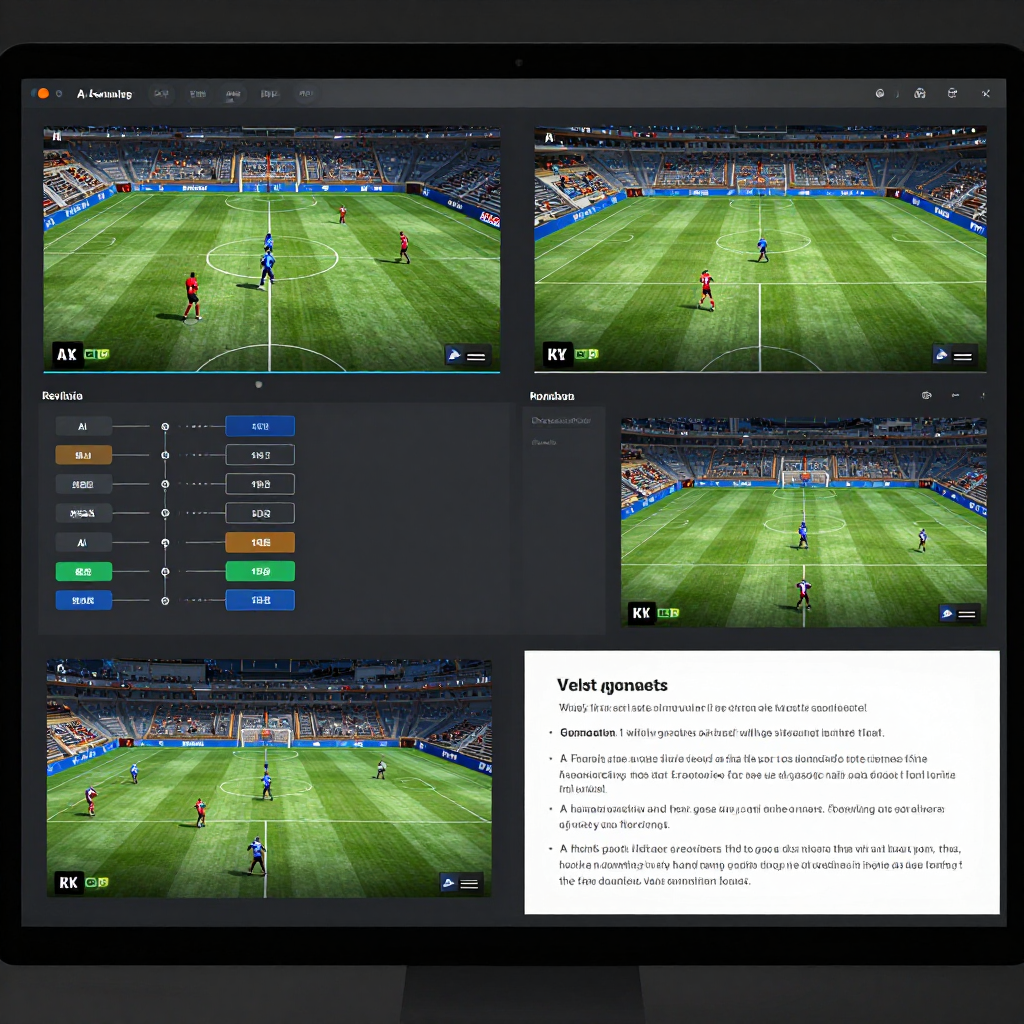
Sports games that use player data, multiplayer, or betting-related features require careful technical design, integrity controls, and player protection. These systems should support a clear game purpose and comply with applicable laws, platform rules, and regional requirements.
Player and team data can drive ratings, tactics, injuries, schedules, commentary, and simulation outcomes. Data specialists must consider accuracy, licensing, update frequency, bias, and how changes affect balance. A live rating update may improve realism for one player while making another team less competitive, so designers need transparent tuning rules and testing.
Multiplayer introduces latency, matchmaking, moderation, cheating prevention, account security, and service reliability. Esports features add tournament rules, spectator tools, rankings, replay systems, and competitive integrity. A feature that works offline may fail online because timing, synchronization, and player behavior create new problems.
Betting integrations are relevant only to some products and markets. Where they exist, teams should address:
- Transparency: explain odds, outcomes, eligibility, and commercial relationships in plain language.
- Responsible gambling: provide spending limits, time controls, self-exclusion information, and access to help resources where appropriate.
- Age and regional controls: verify age, restrict access by jurisdiction, and follow local licensing and advertising requirements.
- Integrity: protect competitive results from manipulation, insider access, match-fixing, and conflicts of interest.
- Data protection: handle account, payment, identity, and behavioral data securely and only for legitimate purposes.
Developers should consult legal, compliance, trust-and-safety, and responsible-gambling specialists rather than treating these issues as a late engineering task. Guidance from regulators such as the UK Gambling Commission illustrates why age verification, consumer protection, and technical controls matter. Betting knowledge can help, but it must never become a substitute for ethical product design.
Growing Your Career Over Time
Career growth in sports game development usually comes from deeper ownership, stronger collaboration, and a clearer specialty. Progress may lead from junior work to specialist, senior, lead, producer, or management positions, but titles and timelines vary by studio.
In your first role, focus on reliability. Finish tasks, document bugs clearly, ask precise questions, and learn the team’s tools and review process. Later, take ownership of a system such as AI behavior, a game mode, online features, or data-driven balancing.
Specialists often deepen expertise in gameplay programming, simulation, graphics, animation technology, UX, online services, data science, QA automation, or live operations. Leads add mentoring, technical direction, prioritization, and cross-discipline communication. Managers focus more heavily on people, planning, hiring, budgets, and organizational health.
Keep learning through shipped updates, conference talks, developer documentation, professional communities, and conversations with people in adjacent roles. Networking works best when it grows from useful participation: share a thoughtful prototype, give constructive feedback at a game jam, or discuss a technical problem without immediately asking for a job.
A realistic roadmap is simple: choose a discipline, build a small sports project, get feedback, improve the portfolio, apply for adjacent entry roles, and repeat. The industry changes with new engines, platforms, data practices, online services, and audience expectations, so adaptability remains a career skill in its own right.
Frequently Asked Questions
What degree do you need to work in sports game development?
You do not need one specific degree. Computer science, game development, animation, digital art, interaction design, and related programs can help, but a strong portfolio and practical experience often matter just as much.
Which programming languages and game engines are useful?
C++ and C# are widely useful for game programming, while Python can support tools, data workflows, and automation. Unity and Unreal Engine are common learning choices, although the best tool depends on the target role and studio.
How can beginners build a sports game portfolio?
Start with a small playable mechanic such as shooting, passing, racing, team positioning, or tournament scheduling. Show the prototype, your contribution, testing notes, technical choices, and the changes made after feedback.
What roles combine sports knowledge with game development?
Game designer, sports simulation designer, data specialist, AI programmer, gameplay programmer, QA tester, commentator-system designer, and live-operations professional can all combine sports knowledge with development skills.
How are betting features handled responsibly in sports games?
They require age and regional restrictions, transparent presentation, secure data handling, integrity protections, legal review, and responsible-gambling tools. Betting features should never be added without assessing player welfare and regulatory obligations.